Introduction: The Next Leap in AR Technology
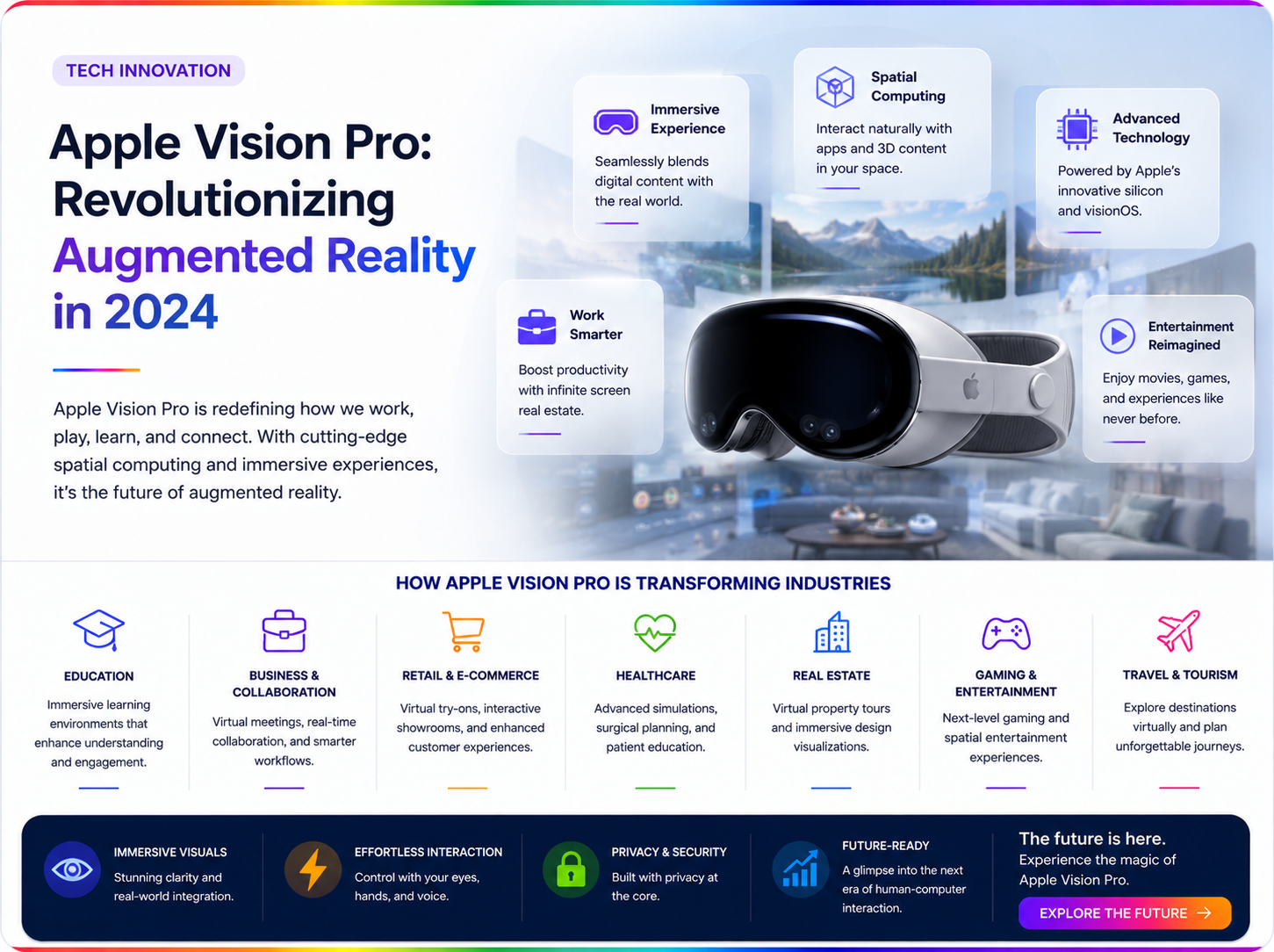
The tech world is buzzing with excitement over the release of the Apple Vision Pro, Apple's ambitious entry into the realm of spatial computing and augmented reality (AR). Unveiled in early 2024, the Vision Pro is positioning itself as more than just another AR headset—it's a paradigm shift in how we interact with the digital and physical worlds.
What is the Apple Vision Pro?
The Apple Vision Pro is a cutting-edge wearable device that blends digital content seamlessly with your physical environment. Designed with Apple's signature focus on user experience, it combines high-resolution displays, advanced sensors, and intuitive controls to deliver immersive AR experiences.
Key Features
- Ultra-High-Resolution Displays: Each eye gets more pixels than a 4K TV, resulting in crisp, lifelike visuals.
- Eye and Hand Tracking: Navigate apps and menus with just your gaze and gestures—no controllers needed.
- Spatial Audio: Sound is rendered in 3D, matching your environment for true immersion.
- Seamless Integration: Works effortlessly with Apple’s ecosystem, including iPhone, iPad, and Mac.
How Apple Vision Pro Stands Out
While several AR and mixed reality headsets exist on the market, the Vision Pro stands out for its cohesive blend of hardware and software. Apple’s custom silicon (the M2 chip paired with the new R1 chip) ensures that real-world and digital elements are synchronized in real-time, minimizing latency and maximizing realism.
User Interface: A New Way to Interact
The Vision Pro introduces a completely new interface called visionOS. Instead of traditional app grids or windows, digital elements float within your physical space. With intuitive controls like eye tracking, voice commands, and gesture recognition, users can:
- Browse the web on a floating Safari window while cooking.
- Attend FaceTime calls where participants appear life-size in your room.
- Play games that interact with your real-world furniture and space.
Applications: Where Vision Pro Shines
The potential of Apple Vision Pro extends far beyond entertainment. Here are some trending use cases:
- Remote Work: Set up multiple virtual monitors for productivity, no matter where you are.
- Education and Training: Experience interactive lessons, 3D models, and simulations for deeper learning.
- Healthcare: Surgeons can overlay patient data during procedures, and therapists can create immersive rehabilitation programs.
- Design and Creativity: Artists and engineers can sculpt, paint, or prototype in three dimensions.
Design and Comfort
Apple emphasizes comfort with a modular design, allowing users to customize the fit with different face cushions and headbands. The device is lighter than many competitors, and features like adjustable lenses cater to users who wear glasses.
Privacy and Security
In the age of always-on cameras and microphones, privacy is paramount. Apple claims that Vision Pro processes most data on-device, and features like Optic ID—an iris recognition system—ensure only the wearer can access personal information. App permissions are transparent and easy to manage, aligning with Apple’s privacy-first philosophy.
Challenges and Criticisms
No product is without its challenges. Early reviewers note a steep price tag—starting at $3,499—which may limit initial adoption to professionals and early tech enthusiasts. The headset's battery life (around 2 hours per charge) is also a point of discussion, though it can be used plugged in for longer sessions.
The Future of Spatial Computing
The launch of Apple Vision Pro signals a major step forward in mainstream AR adoption. Already, developers are working on a wave of new apps and experiences tailored to the device’s unique capabilities. As Apple further refines the hardware and lowers costs, expect to see AR become an everyday part of life, from navigation and shopping to socializing and entertainment.
Should You Buy the Apple Vision Pro?
If you’re passionate about technology, design, or immersive experiences—and have the budget—Vision Pro offers a glimpse into the future. For businesses exploring new ways to collaborate or engage customers, early adoption could provide a competitive edge. For most consumers, waiting for future, more affordable iterations may be wise.
Conclusion
The Apple Vision Pro is more than just a cool gadget; it’s a bold vision of what our digital future could look like. Its seamless blend of AR, cutting-edge hardware, and intuitive design set a new standard for the industry. While it’s still early days, the Vision Pro’s impact is already being felt across tech, business, and creative communities.