

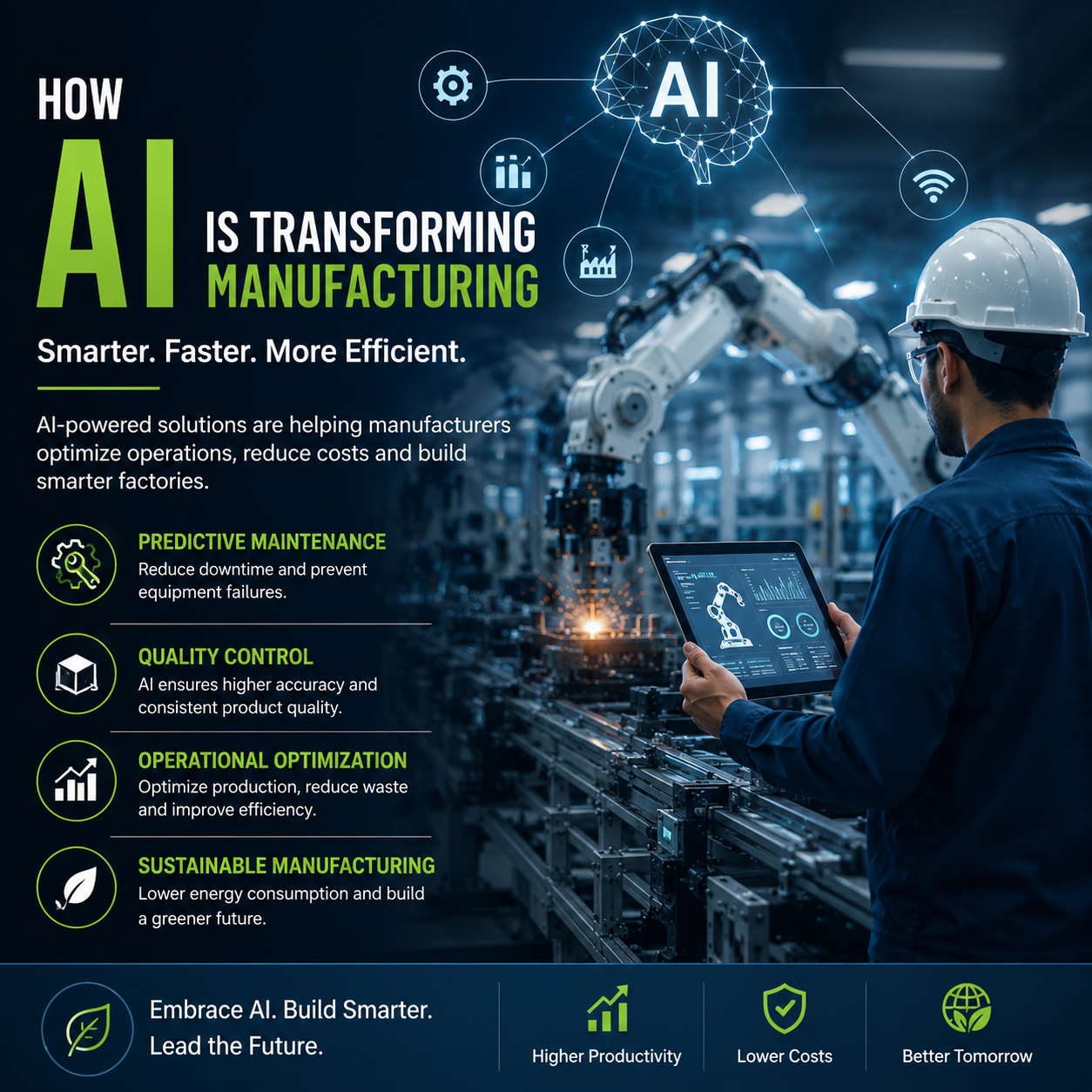
The 2026 Manufacturing Revolution: Powered by Artificial Intelligence
In 2026, artificial intelligence (AI) is no longer just a futuristic concept or a customer service chatbot. It has become the backbone of modern manufacturing, driving efficiency, quality, and innovation. From smart factories humming with interconnected devices to predictive maintenance systems that prevent costly breakdowns, AI is fundamentally reshaping the way products are made worldwide.
Smart Factories: The Heart of AI-Driven Manufacturing
Smart factories leverage AI, Internet of Things (IoT) sensors, and real-time analytics to create agile, responsive production environments. These facilities operate with minimal human intervention, relying on intelligent machines and systems to manage everything from supply chains to assembly lines.
Key Features of AI-Powered Smart Factories
- Real-time data collection: Sensors gather data on equipment performance, product quality, and environmental conditions.
- Automated decision-making: AI algorithms analyze data and instantly adjust production parameters for optimal results.
- Seamless integration: Machines, robots, and enterprise systems communicate and collaborate, reducing bottlenecks and downtime.
This level of automation allows manufacturers to respond quickly to market demands, customize products, and minimize waste—all while maintaining high standards of quality.
Predictive Maintenance: Preventing Downtime Before It Happens
Gone are the days of reactive maintenance and unexpected equipment failures. In 2026, AI-powered predictive maintenance solutions are a game-changer for manufacturing plants. By analyzing historical and real-time data from machinery, AI systems can predict when a component is likely to fail—sometimes weeks or months in advance.
Benefits of AI-Based Predictive Maintenance
- Reduced Downtime: Maintenance can be scheduled proactively, preventing costly unplanned stoppages.
- Extended Equipment Life: Timely interventions ensure machines run at peak efficiency for longer.
- Lower Maintenance Costs: Fewer emergency repairs mean less disruption and lower expenses.
Manufacturers leveraging predictive maintenance in 2026 are seeing significant improvements in productivity and return on investment.
Optimizing Production and Reducing Waste
AI is also revolutionizing how manufacturers manage resources and optimize operations. Advanced analytics and machine learning algorithms monitor every stage of the production process, identifying inefficiencies and recommending adjustments in real time.
How AI Drives Production Efficiency
- Dynamic scheduling: AI systems automatically adjust production schedules based on demand fluctuations, raw material availability, and machine status.
- Process optimization: Algorithms analyze production data to suggest process improvements that enhance throughput and quality.
- Waste reduction: Machine vision and AI-powered quality control systems detect defects early, minimizing material waste and rework.
These innovations help manufacturers become more sustainable and competitive by reducing energy consumption, raw material usage, and overall waste.
Elevating Quality Control with AI
Quality control is a critical aspect of manufacturing, and AI is raising the bar in 2026. High-resolution cameras and machine vision systems, driven by deep learning, inspect products at incredible speeds and with unmatched accuracy.
AI Quality Control in Action
- Defect detection: AI systems spot minute flaws invisible to the human eye, ensuring only top-quality products reach customers.
- Continuous learning: Quality control algorithms improve over time, adapting to new product designs and manufacturing methods.
- Instant feedback: When defects are detected, AI systems alert operators and adjust production settings to prevent further issues.
This level of precision minimizes recalls, enhances brand reputation, and delivers better value to customers.
Energy Efficiency and Sustainability
With increasing focus on sustainability, manufacturers in 2026 are using AI to make factories more energy-efficient. AI analyzes energy consumption patterns, automatically adjusts lighting, heating, and machine operation, and even suggests ways to reduce emissions.
AI-Driven Sustainability Strategies
- Smart energy management: AI systems balance energy loads and shift operations to off-peak hours, reducing costs and emissions.
- Resource optimization: Machine learning models identify opportunities to reuse or recycle materials within the production process.
- Environmental monitoring: Sensors and AI track air and water quality, ensuring factories comply with environmental regulations.
These strategies help manufacturers reduce their carbon footprint and meet the growing demand for eco-friendly products.
The Future: Collaboration Between Humans and AI
While AI handles data-heavy, repetitive tasks, human workers in 2026 are focusing on creative problem-solving, process innovation, and strategic planning. The combination of human ingenuity and AI’s analytical power is driving manufacturing into a new era of efficiency and excellence.
As AI continues to evolve, manufacturers who embrace these technologies will be well-positioned to lead in a fast-changing global market—delivering higher quality products, faster, and more sustainably than ever before.