
Asteroid Watch 2026: How New Space Missions Are Tracking Potentially Dangerous Objects
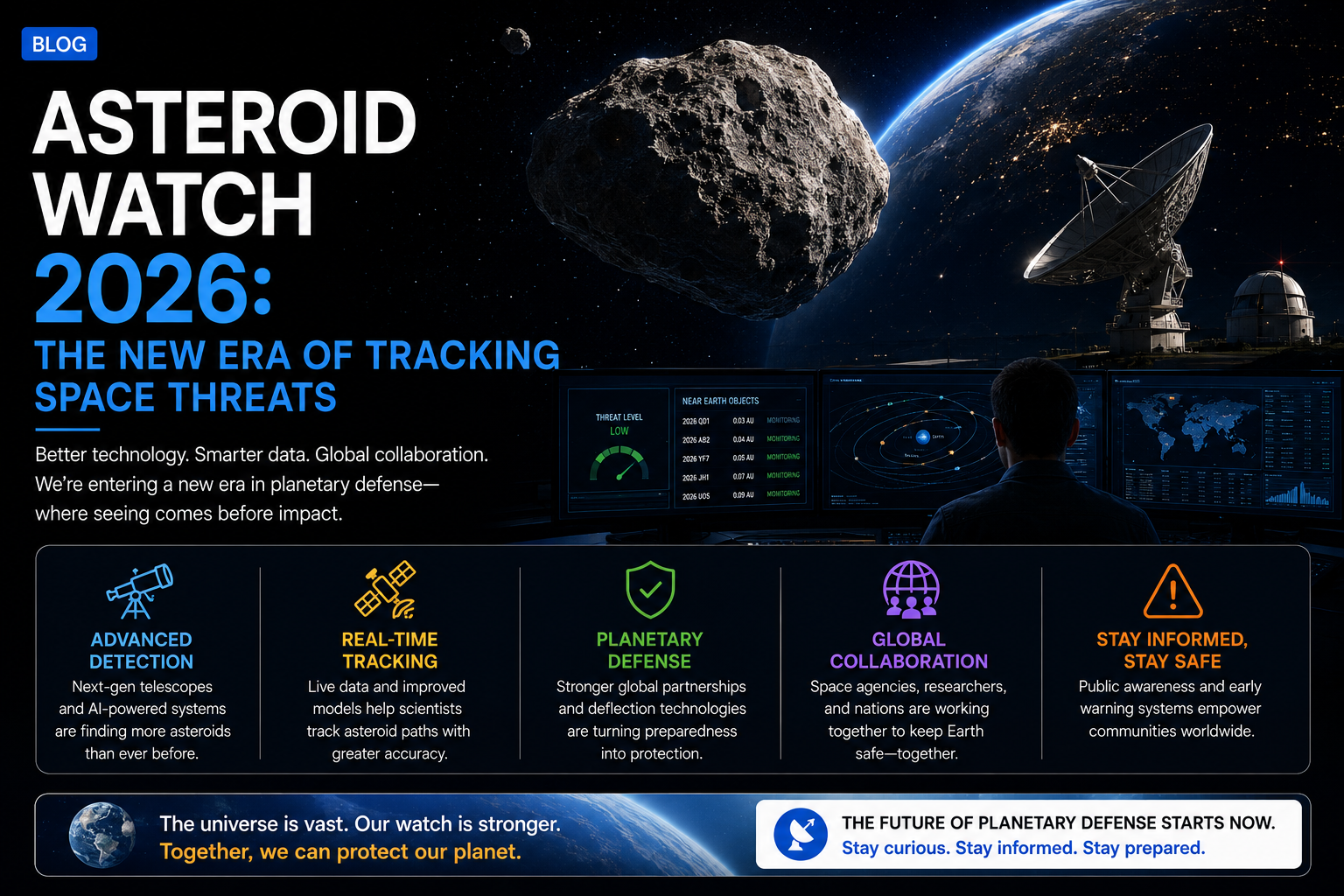
In recent years, the science of asteroid detection has advanced rapidly, capturing headlines and sparking public interest. With 2026 on the horizon, global space agencies are deploying innovative missions and technologies to identify, monitor, and potentially mitigate threats from near-Earth objects (NEOs). But what makes 2026 a pivotal year for asteroid watch? Let’s explore the missions, technologies, and the growing international coordination that are shaping our planetary defense strategy.
Why Asteroid Tracking Matters More Than Ever
Asteroids, remnants from the formation of the solar system, orbit the Sun and occasionally pass close to Earth. Most are harmless, but some—deemed potentially hazardous asteroids (PHAs)—are large enough and come close enough to pose a risk. The infamous Chelyabinsk meteor event in 2013 reignited concerns about undetected space rocks, emphasizing the need for vigilant monitoring.
According to NASA, there are over 30,000 known NEOs, with hundreds of new discoveries every year. The challenge lies not only in detection but also in accurately predicting their trajectories and potential impact risks.
Major Space Missions Leading the Charge in 2026
Several groundbreaking missions are set to revolutionize asteroid tracking by 2026. Here’s a look at the key players and their objectives:
- NASA’s Near-Earth Object Surveyor Mission (NEO Surveyor): Scheduled for launch in 2026, NEO Surveyor is a space-based infrared telescope designed to detect and characterize potentially hazardous asteroids and comets. Operating from space gives NEO Surveyor a unique vantage point, allowing it to spot dark or hard-to-see objects that ground-based observatories might miss.
- ESA’s Flyeye Telescope: The European Space Agency is developing the Flyeye, a ground-based telescope capable of scanning large swathes of the sky every night. Its unique optical design mimics the structure of a fly’s eye, enabling rapid detection of fast-moving objects.
- China’s Near-Earth Asteroid Defense Mission: China has announced plans to test deflection techniques and tracking technologies as part of its broader planetary defense initiative. Their mission, expected around 2026, aims to study and potentially alter an asteroid’s course.
Emerging Technologies Powering Asteroid Detection
The new generation of asteroid watch missions leverages advanced technologies to enhance both detection and response:
- Infrared Sensors: Unlike visible light, infrared can detect the heat signatures of asteroids, making it easier to spot those with low reflectivity.
- Machine Learning Algorithms: Artificial intelligence now assists in analyzing vast datasets from telescopes, rapidly identifying potential threats and predicting their orbits.
- Global Data Sharing: Collaboration among agencies—such as NASA, ESA, JAXA, and CNSA—ensures that critical asteroid data is shared in real-time, improving global preparedness.
International Collaboration: A United Front Against Space Hazards
No single nation can shoulder the responsibility of tracking every space threat. The 2026 asteroid watch initiatives emphasize international cooperation. The International Asteroid Warning Network (IAWN) and the Space Mission Planning Advisory Group (SMPAG) coordinate between countries, pooling resources and sharing early warning information.
In 2026, joint simulation exercises and coordinated observation campaigns are planned, further strengthening global readiness. These efforts are vital for developing unified response protocols in the event of a real threat.
What Happens If a Threat Is Detected?
Detection is just the first step. If a potentially dangerous asteroid is found on a collision course with Earth, agencies have several response options:
- Deflection Missions: Techniques such as kinetic impactors (like NASA’s DART mission) or gravity tractors could alter an asteroid’s trajectory.
- Evacuation and Civil Defense: For smaller objects or short warning times, evacuation plans and public warnings become crucial.
- Continued Observation: Close monitoring refines impact predictions, enabling better-informed decisions.
Public Engagement and Citizen Science
The asteroid watch movement isn’t limited to professionals. Amateur astronomers and citizen scientists play a vital role in monitoring the skies. Several platforms, such as the Minor Planet Center, encourage the public to report observations, increasing the chances of early detection.
In 2026, expect more outreach programs, educational initiatives, and even mobile apps that let you track NEOs in real time. Engaging the public not only raises awareness but also expands our collective vigilance.
Looking Ahead: A Safer Future
While the risk of a major asteroid impact in any given year is low, the consequences could be catastrophic. Thanks to new missions, advanced technology, and unprecedented global cooperation, 2026 marks a turning point in planetary defense. As we continue to scan the skies, humanity is better prepared than ever to detect, track, and respond to cosmic threats.
References:
- NASA: Near-Earth Object Observations Program
- ESA: Planetary Defence
- International Asteroid Warning Network: iawn.net