
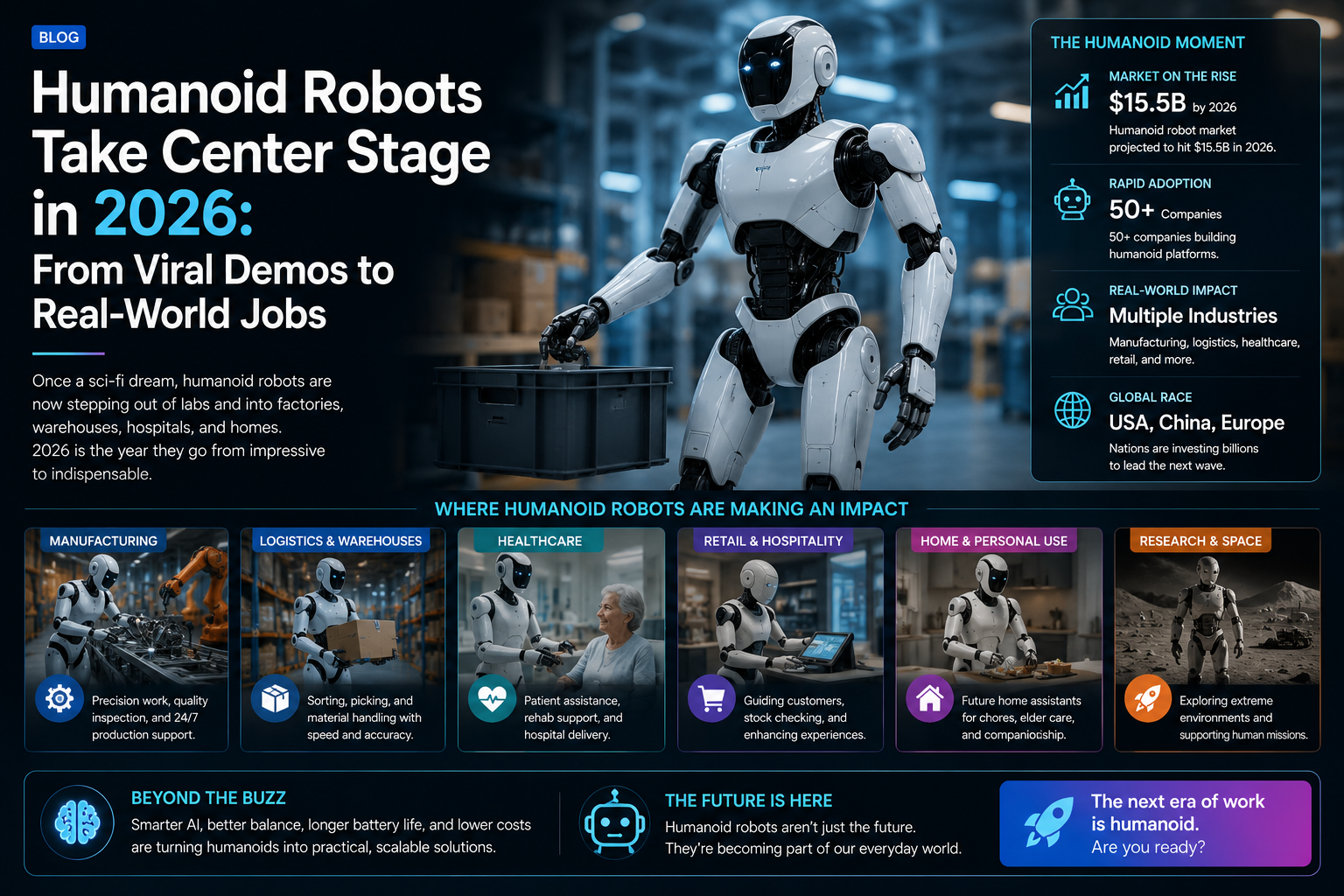
The Rise of Humanoid Robots: 2026’s Breakout Stars
In 2026, humanoid robots are no longer confined to sci-fi movies or curiosity-driven laboratory experiments. They have stepped into the limelight, captivating audiences with viral demonstrations and, most importantly, making a tangible impact in various industries. This year marks a turning point, as these sophisticated machines transition from spectacle to skilled workforce, reshaping how we live and work.
From Viral Sensations to Practical Solutions
It’s impossible to discuss the surge of humanoid robots in 2026 without mentioning the social media buzz. Videos of robots flawlessly performing complex tasks—dancing, cooking, or navigating bustling city streets—have garnered millions of views. But behind the spectacle lies a deeper story: rapid advances in artificial intelligence, robotics engineering, and sensor technology have made it possible for these machines to handle real-world challenges with unprecedented dexterity and empathy.
Key Industries Embracing Humanoid Robots
Humanoid robots are now contributing in ways that directly benefit businesses and society. Here are some sectors where their impact is most noticeable:
- Healthcare: Robots assist nurses by delivering medication, transporting supplies, and even providing companionship to patients. Their ability to adapt to changing environments and interact with humans gently makes them ideal for hospital settings.
- Retail and Hospitality: Customer service robots greet guests, answer questions, and even help with stocking shelves. Their presence in hotels and stores not only boosts efficiency but also offers a touch of futuristic charm.
- Manufacturing and Logistics: On factory floors, humanoid robots handle repetitive or dangerous tasks, freeing human workers for more creative roles. In warehouses, they efficiently pick, pack, and sort goods alongside their human counterparts.
- Home Assistance: High-end households are embracing robots as personal assistants—helping with chores, providing security, and even tutoring children. Their ability to learn user preferences means they become more helpful over time.
Technology Behind the Transformation
What has made this leap possible? Several technological breakthroughs have converged:
- AI-Powered Perception: Advanced neural networks have given robots the ability to understand spoken language, recognize faces, and interpret human emotions, allowing for more natural interactions.
- Agile Robotics: Next-gen actuators and sensors enable robots to move with human-like grace, whether it’s climbing stairs or assembling delicate electronics.
- Cloud Connectivity: Real-time updates and learning from a global network ensure that robots constantly improve their skills and adapt to new environments.
- Longer Battery Life: Innovations in energy storage mean robots can work longer shifts without frequent recharging, making them more viable for commercial use.
Challenges on the Path to Widespread Adoption
Despite their progress, humanoid robots face hurdles. High costs, concerns about privacy and safety, and debates over job displacement remain at the forefront. Regulatory frameworks are still evolving, and businesses must carefully balance the benefits of automation with the need for a human touch.
Yet, many experts argue that robots can complement rather than replace human workers—taking over mundane or hazardous tasks so people can focus on roles that require creativity, empathy, and critical thinking. Early adopters are already reporting higher productivity and improved employee satisfaction as a result.
The Cultural Impact: Shaping Society’s Future
Beyond the workplace, humanoid robots are influencing culture and daily life. They are featured at public events, in educational programs, and even as companions for the elderly. Their presence sparks important conversations about ethics, inclusivity, and the future of human-robot relationships.
In Japan, for example, robots have become part of community life—helping with disaster response and supporting aging populations. In the United States and Europe, pilot programs are exploring how robots can enhance accessibility for people with disabilities. These initiatives highlight the potential for robots to foster a more inclusive and resilient society.
What’s Next for Humanoid Robots?
As 2026 unfolds, the momentum shows no sign of slowing down. Tech giants and startups alike are racing to refine their robotic offerings, with new models promising even greater adaptability and emotional intelligence. Governments are investing in training programs to prepare workers for robot-assisted workplaces, ensuring a smooth transition into this new era.
If the past year’s viral demos are any indication, humanoid robots are not just a passing trend—they are poised to become indispensable partners in our daily lives. The coming years will reveal just how seamlessly these remarkable machines can integrate into society, unlocking new possibilities for work, play, and human connection.
References: Boston Dynamics, Figure AI, Agility Robotics, International Federation of Robotics, Wired Magazine, IEEE Spectrum, TechCrunch (2026)